Noticing more hair in your brush, shower drain, or on your pillow can be unsettling, especially when thinning seems to progress despite your best efforts. Platelet-rich plasma, or PRP, has emerged as a nonsurgical option designed to support weakened hair follicles and encourage healthier growth. But does it actually work, and who is most likely to benefit? This guide explores PRP hair loss treatment in Newport Beach and Beverly Hills.
What Is PRP Hair Loss Treatment?
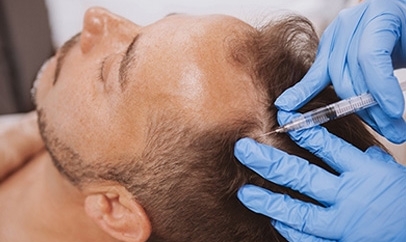
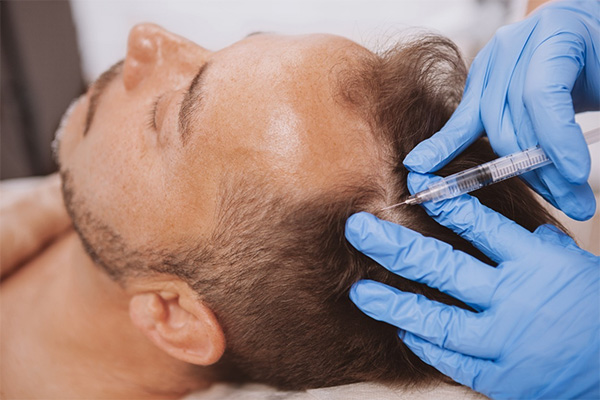
PRP hair restoration uses a patient's own blood to prepare a concentrated solution containing platelets and growth factors. During treatment, a small blood sample is collected and processed to separate the platelet-rich component. The resulting PRP is then injected into areas of the scalp affected by thinning.
The rationale behind PRP is that platelets contain biological factors involved in tissue repair and cellular signaling. When introduced into the scalp, these factors may help support the function of existing hair follicles. PRP is therefore generally considered a treatment for supporting existing follicles rather than creating completely new follicles in areas where hair follicles have been permanently lost.
Pure Hair Restoration Center offers PRP hair restoration as part of its nonsurgical approach to managing hair loss.
Can PRP Actually Help Hair Regrowth?
Research suggests that PRP can improve several measures of hair growth in some people with androgenetic alopecia, including hair density and thickness. However, results vary considerably between individuals, and PRP is not a guaranteed solution for hair loss.
The treatment tends to be more relevant when follicles are still present but producing progressively thinner hairs. Earlier intervention may therefore be more useful than waiting until substantial follicular loss has occurred.
It is also important to understand that PRP is not equivalent to a hair transplant. A transplant relocates follicles from a donor area into regions affected by permanent hair loss, whereas PRP aims to improve the environment around existing follicles.
Who May Benefit From PRP Hair Restoration?
PRP may be considered for people experiencing certain types of thinning hair, particularly pattern hair loss. A proper evaluation is important because hair loss can also result from nutritional deficiencies, hormonal changes, autoimmune conditions, medications, stress, or other medical factors.
At a specialized hair restoration practice, assessment can help determine whether PRP is appropriate or whether another treatment should be considered first. Pure Hair Restoration Center also offers medical hair-loss management and genetic testing, which may provide additional information when the underlying cause is uncertain.
What Happens During PRP Hair Treatment?
A typical PRP session involves three basic stages. First, a small amount of blood is drawn. Second, the sample is processed to concentrate the platelets. Third, the prepared PRP is administered into selected areas of the scalp.
The procedure is performed without harvesting or transplanting hair follicles. Because PRP uses the patient's own blood components, it is considered an autologous treatment.
The number and frequency of sessions depend on the individual's hair-loss pattern, treatment goals, and clinical assessment. Patients should discuss the recommended treatment schedule with their provider rather than assuming that one session will produce lasting regrowth.
PRP vs. Hair Transplant: Which Is Better?
These treatments address different problems. PRP is primarily intended to support existing follicles and may be particularly useful when hair is thinning but follicles remain viable.
Hair transplantation, including FUE and FUT, is designed to physically move hair follicles from a donor area to an area requiring restoration. It may be more appropriate when there are established areas of permanent hair loss.
In some cases, a combination approach can be considered. Medical hair-loss treatment or PRP may help support existing hair, while transplantation addresses areas where density has already been lost.
PRP Hair Restoration in Newport Beach and Beverly Hills
Patients seeking PRP hair loss treatment in Newport Beach or Beverly Hills may benefit from choosing a practice that evaluates both surgical and nonsurgical options. Pure Hair Restoration Center provides PRP alongside FUE and FUT transplantation, medical hair-loss management, low-level light therapy, laser hair restoration, and other specialized hair-loss services.
This broader approach can be useful because effective hair restoration begins with identifying the type and progression of hair loss rather than selecting a procedure based solely on popularity.
Frequently Asked Questions About PRP Hair Loss Treatment
1. Does PRP really regrow hair?
PRP may improve hair density and thickness in some patients, particularly when follicles are weakened but still active. Results vary, and PRP cannot reliably recreate follicles that have been permanently lost.
2. How many PRP sessions are needed for hair loss?
The number of sessions varies according to the patient's condition and treatment plan. A hair restoration specialist can recommend an appropriate schedule after evaluating the pattern and severity of hair loss.
3. Is PRP better than a hair transplant?
PRP and hair transplantation serve different purposes. PRP supports existing follicles, while transplantation relocates follicles to areas with permanent hair loss. The appropriate option depends on the extent and cause of thinning.
4. How long does PRP take to work for hair loss?
Hair growth is gradual, so PRP should not be expected to produce immediate results. Changes may develop over several months, and ongoing treatment may be recommended to maintain or enhance improvement.
5. Can women get PRP for hair loss?
Yes. PRP may be considered for women experiencing certain forms of hair thinning. Because female hair loss can have multiple causes, identifying the underlying condition is an important part of deciding whether PRP is appropriate.
Is PRP Right for Your Hair Loss?
PRP can be a useful nonsurgical option for selected patients, particularly when thinning follicles remain capable of producing hair. If you are considering PRP hair loss treatment in Newport Beach or Beverly Hills, a personalized evaluation can help determine whether PRP, medical management, hair transplantation, or a combination of treatments best fits your hair restoration goals.
Authorship: Dr. Nader Ronaghi, MD is a board-certified physician and leading hair restoration specialist based in Newport Beach, California. A Diplomate of the American Board of Hair Restoration Surgery (ABHRS) and active member of the International Society of Hair Restoration Surgery (ISHRS), he brings over a decade of experience in advanced FUE and FUT hair transplantation, regenerative therapies, and aesthetic medicine. As Founder and Medical Director of Pure Hair Restoration in Newport Beach, Dr. Ronaghi is recognized for his meticulous technique, natural results, and commitment to innovation and patient-centered care.
Disclaimer
The information provided on this page is intended for educational purposes only and should not be considered medical advice. Always seek the guidance of a qualified physician regarding any medical condition or treatment.